
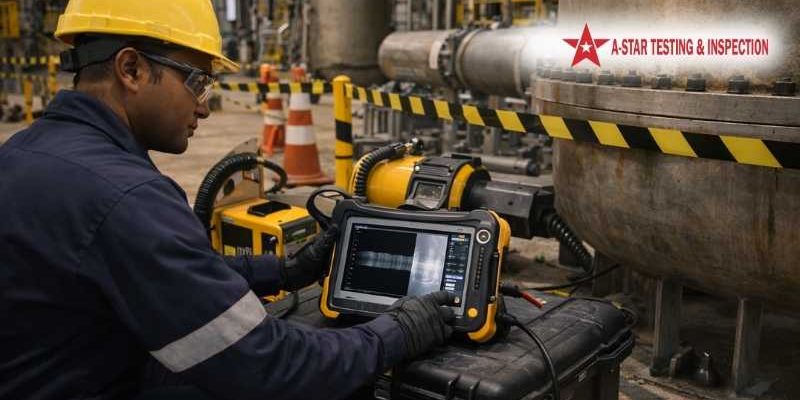
Modern radiographic techniques have brought about a transformation in industrial inspection. Computed Radiography and Digital Radiography are now becoming the inspection techniques of choice in any industry due to their ability to provide faster imaging, better defect detection, and effective digital reporting. Such technologies assist the inspectors in examining welds, pipelines, pressure vessels, storage tanks, structural components, and critical equipment without damaging the material.
This guide describes the functionality of both technologies, their advantages, significant uses, and differences, and how to choose the most appropriate solution when it comes to industrial inspection needs.
What is Computed Radiography?
Computed Radiography (CR) is a type of digital imaging that substitutes the conventional X-ray films with reusable opaque plates in the imaging process. Once the imaging plate is exposed to X-rays or gamma rays, a CR reader scans the plate and translates the image that it contains into a high-quality digital file.
In contrast to traditional film radiography, CR does not use chemical processing and creates detailed images, which may be improved, stored, and distributed electronically.
Since the imaging plates can be reused, this can also minimize the operational costs in the long run.
What is Digital Radiography?
Digital Radiography (DR) is a better technology that records the images in a flat-plane digital detector. The picture is displayed almost immediately on a computer display, and the results could be reviewed by the inspectors in real time.
This technology saves a lot of time in inspection and assists in making quick decisions, thus suitable in projects where speed and productivity matters.
How Does the Radiographic Inspection Process Work?
CR and DR have dissimilar image capture approaches, but the working process of the inspection is typically the same.
Step 1: Component Preparation
The weld or material is laid in place in the correct position to enable good X-ray exposure.
Step 2: Radiation Exposure
Radiation is passed through the test object by an X-ray generator or gamma-ray source. The radiation is absorbed differently by material of different densities.
Step 3: Image Capture
- CR involves the use of a reusable imaging plate.
- DR records the image by direct use of a digital detector.
Step 4: Image Processing
The digital image is manipulated with specific software, which enables the inspectors to zoom, contrast, measure defects, and enhance image clarity.
Step 5: Inspection Report
The end inspection report is created in electronic format and can be stored to be referred to later or shared with clients in real-time.
Benefits of Digital Radiographic Inspection
Compared to the traditional film-based inspection, Modern Radiographic Testing (RT) has a number of operational benefits.
Faster Inspection
Digital images can be accessed in minutes, and this cuts down on waiting time and enhances the efficiency of inspection.
Improved Image Quality
High-tech software enables the inspectors to modify the brightness, contrast, and sharpness to enable improved visibility of defects.
Lower Operating Costs
Computed radiography also helps in saving the cost of buying new films over and over again, using the same plates to reuse them by way of imaging, whilst digital systems also save on the use of consumables.
Easy Data Storage
The records on inspection may be stored in electronic form, and this makes it very easy to retrieve and document them in the long term.
Environmentally Friendly
Digital inspection eliminates the use of chemical film processing, thus minimizing the production of hazardous wastes.
Better Collaboration
It is possible to share digital reports immediately with engineers, clients, and quality teams, regardless of their location.
Applications Across Industries
Both technologies find massive use in industrial radiography testing in other fields.
A few of its common uses are:
- Weld inspection
- Pressure vessel examination
- Pipeline inspection
- Storage tank assessment
- Heat exchanger inspection
- Structural steel evaluation
- Aerospace component inspection
- Power plant maintenance
- Petrochemical facilities
- Infrastructure.
- Offshore and marine equipment.
- Manufacturing quality control
These applications aid in detecting cracks, porosity, corrosion, absence of fusion, inclusions, and other internal defects before they turn out to be serious failures.
CR vs DR (Computed Radiography vs Digital Radiography)
Knowledge of the distinction aids industries in adopting the appropriate inspection procedure.
|
Feature |
Computed Radiography |
Digital Radiography |
|
Image Capture |
Imaging Plate |
Digital Detector |
|
Image Availability |
Post Plate Scanning |
Instant |
|
Equipment Cost |
Less initial Investment |
Greater initial Investment |
|
Inspection Speed |
Fast |
Very Fast |
|
Image Quality |
Excellent |
Superior |
|
Plate Reusability |
Yes |
Not Required |
|
Productivity |
High |
Highest |
|
Portability |
Good |
Depends on Detector Type |
CR is commonly used in instances of upgrading film systems in organizations, whereas DR is mostly used in cases where real-time imaging and speed of inspection are important.
Choosing the Right Radiography Solution
The best inspection technique relies on a number of considerations:
- Project size
- Inspection frequency
- Required turnaround time
- Budget
- Component geometry
- Accessibility
- Reporting requirements
CR can be beneficial to facilities that conduct regular inspections and where flexibility in the inspection process is important, and where DR systems are often more efficient in large-volume production settings.
A qualified inspection provider is able to suggest the most appropriate solution, as per the project requirements.
Why Digital X-ray Inspection is Replacing Film Radiography
Digital X-ray Inspection is becoming popular in modern industries due to its ability to enhance productivity and ensure high-quality inspection.
Some of the key causes are:
- Immediate image review
- Faster project completion
- Better defect visualization
- Reduced storage space
- Easier regulatory compliance
- Improved traceability
- Simplified report management
- Reduced environmental impact
These benefits render digital inspection as a feasible option when it comes to quality assurance programs.
The Role of Non-Destructive Testing (NDT)
One of the most useful methods of Non-Destructive Testing (NDT) is radiographic inspection. It allows inspectors to analyze the inside of the parts without cutting, disassembling, or destroying the material.
Radiography, when used with other testing techniques including Ultrasonic Testing (UT), Magnetic Particle Testing (MT), Liquid Penetrant Testing (PT), and Phased Array Ultrasonic Testing (PAUT), will give a complete evaluation on structural integrity.
Frequently Asked Questions (FAQs)
Q1. What is the difference between Computed Radiography and Digital Radiography?
Computed Radiography makes use of reusable imaging plates which need to be scanned after exposure, as opposed to Digital Radiography which uses digital detectors to render images immediately.
Q2. Is Digital Radiography more accurate than traditional film?
Digital systems also offer enhanced image processing, contrast sharpening and quick interpretation, with high inspection quality.
Q3. What are some industries that employ radiographic inspection?
These inspection methods are commonly used in oil & gas, petrochemical, power generation, marine, aerospace, manufacturing, construction and heavy engineering industries.
Q4. Is it possible to identify internal weld defects using digital radiography?
Yes. It is able to detect internal discontinuities like cracks, porosity, slag inclusions, lack of fusion, and incomplete penetration.
Q5. What is the reason why digital inspection is gaining popularity?
It saves on inspection time, enhances documentation, does away with chemical processing, promotes digital reporting, and saves on operational efficiency.
Conclusion
Computed Radiography and Digital Radiography has revolutionized industrial inspection by providing a faster workflow, better quality of images, and an efficient way of establishing digital records. Whereas Computed Radiography is a viable step towards the elimination of traditional film systems using reusable imaging plates, Digital Radiography offers immediate image acquisition in high-productivity settings. The choice of an appropriate solution is based on the inspection goals, project size, turnaround, and budget. With digital inspection technologies persistently being embraced by industries, these approaches continue to play a crucial role in enhancing quality control, minimizing downtimes, and facilitating safer and more efficient operations in key industrial assets.